
Corsica is a beautiful island. I think it is now Conor’s favorite place to anchor with its long sandy beaches and bays that allow for excellent holding. Of course, these sandy beaches also make for the clearest water you can imagine and great swimming. Green and dramatic mountains add to the landscape, and lovely quaint French towns add to the experience.
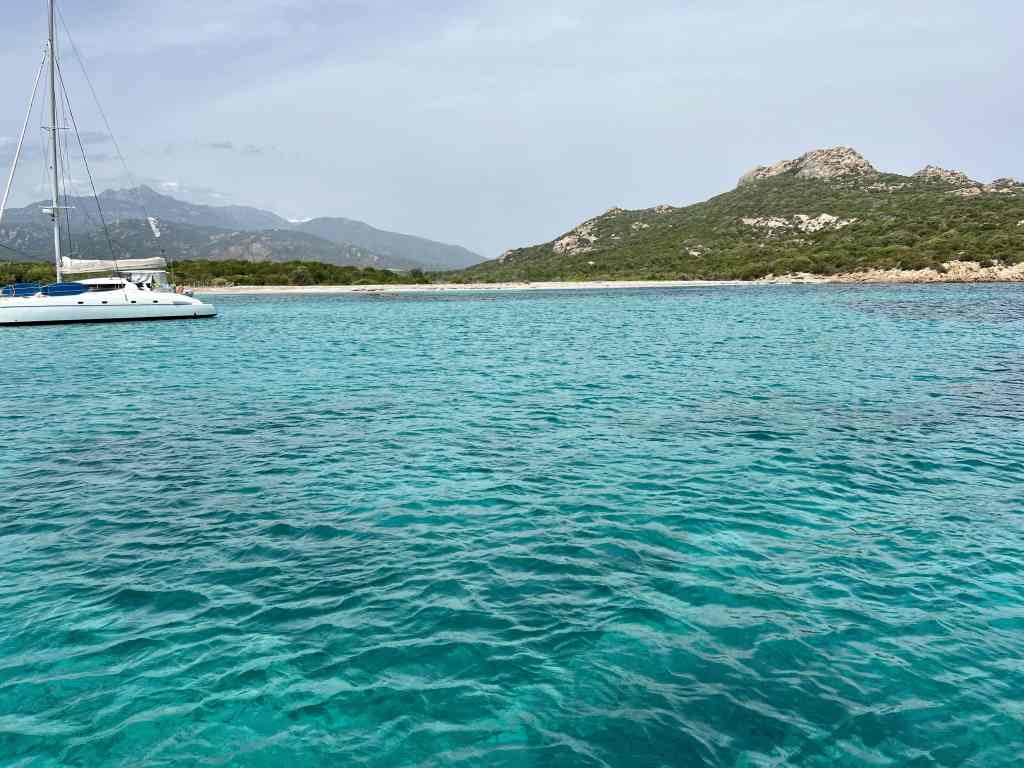
Sounds like the perfect place to sail, right? Well, the flip side is what is called the Mistral. In the Mediterranean, there are actually several predictable winds that blow regularly. They each have their own name – like the Bora which we experienced a lot in Croatia and Montenegro, and this year the Sirocco which comes from Africa and typically dumps red sand on everything. (You can learn about seven winds here.) The Mistral is a new one for us, and we’re learning that it makes sailing around Corsica extremely challenging. It is a dry, cold, and very strong wind that comes from northern France and expels itself into the Med via the Gulf of Lion. Strong winds also create big swell.
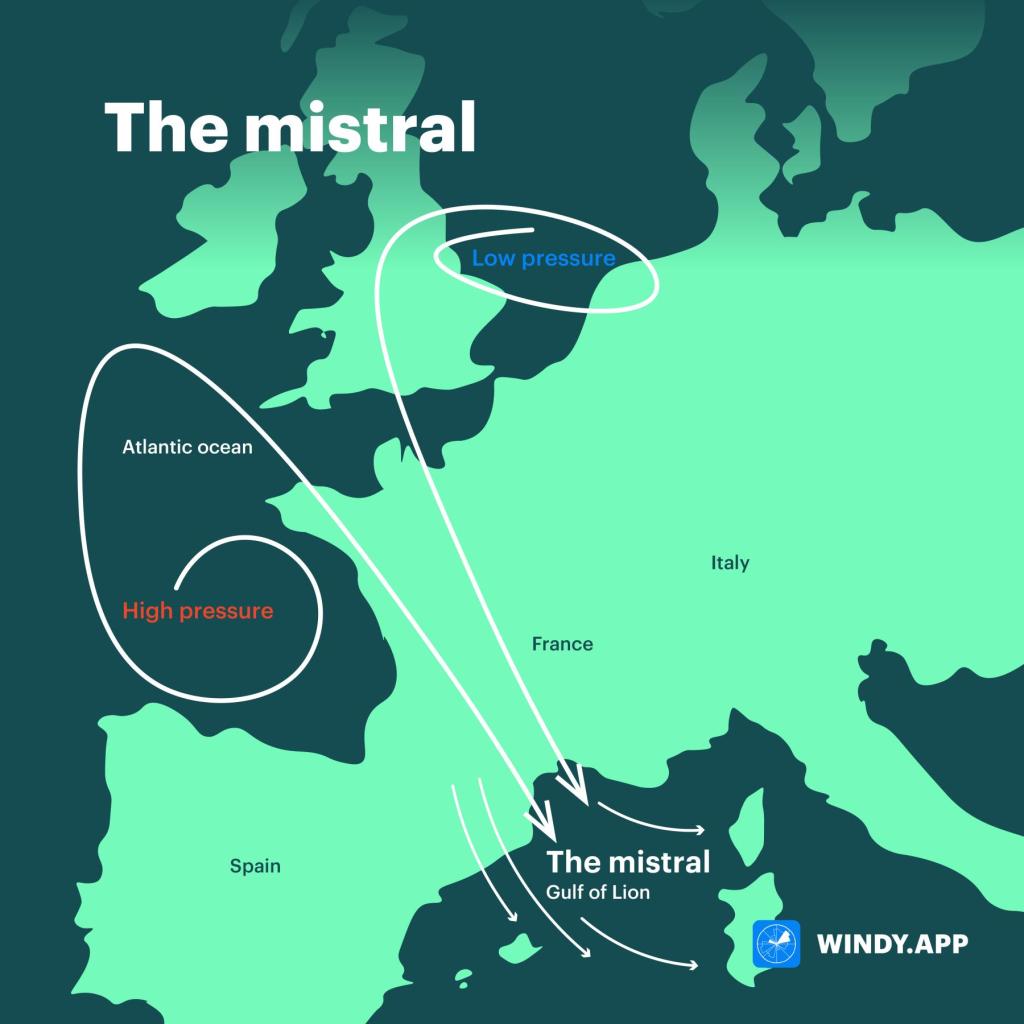
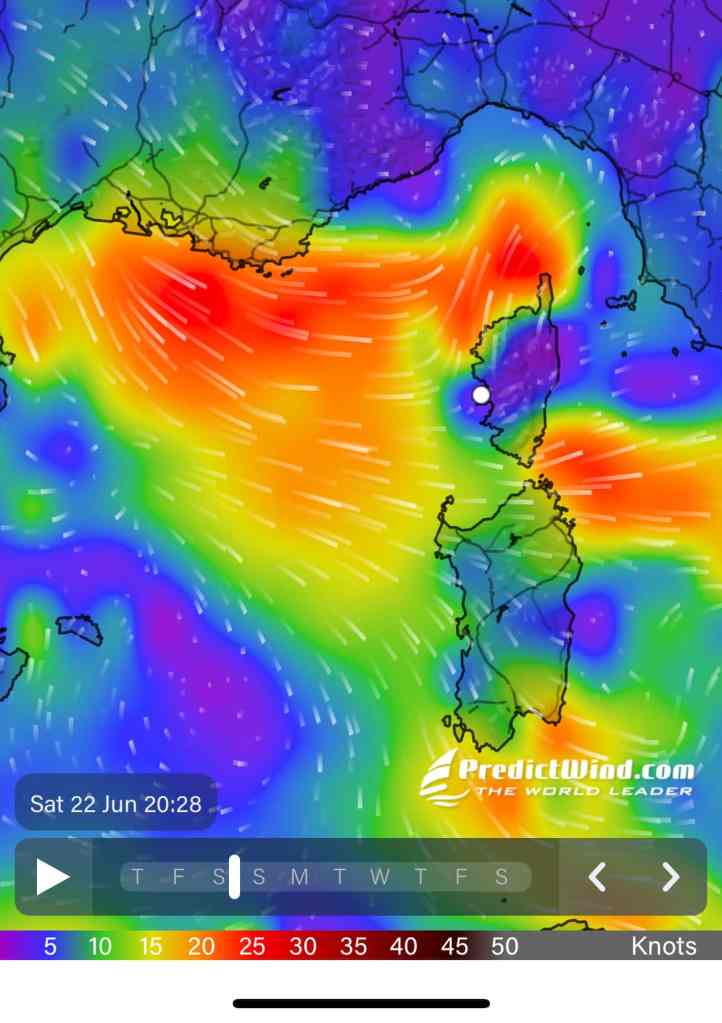
The Mistral is supposed to be strongest during the winter and spring, but sailors across the area have been commenting how strong it’s been this summer and last. It can typically reach 40 miles per hour (or up to 112 mile per hour during strong times of year) and last about a week. This is why we hung out in Saint-Florent for a week, just waiting for the Mistral to pass so we could head west. This is also why we’ve timed our movement down the west coast of Corsica just so. So far, we seem to see a Mistral every other week, so weather windows are small. We stopped at four anchorages after we left Calvi on our way to the southern tip of Corsica and the famous city of Bonifacio. It was quite the week of winds and weather.
Best day ever. Not.
Our first anchorage was lovely:
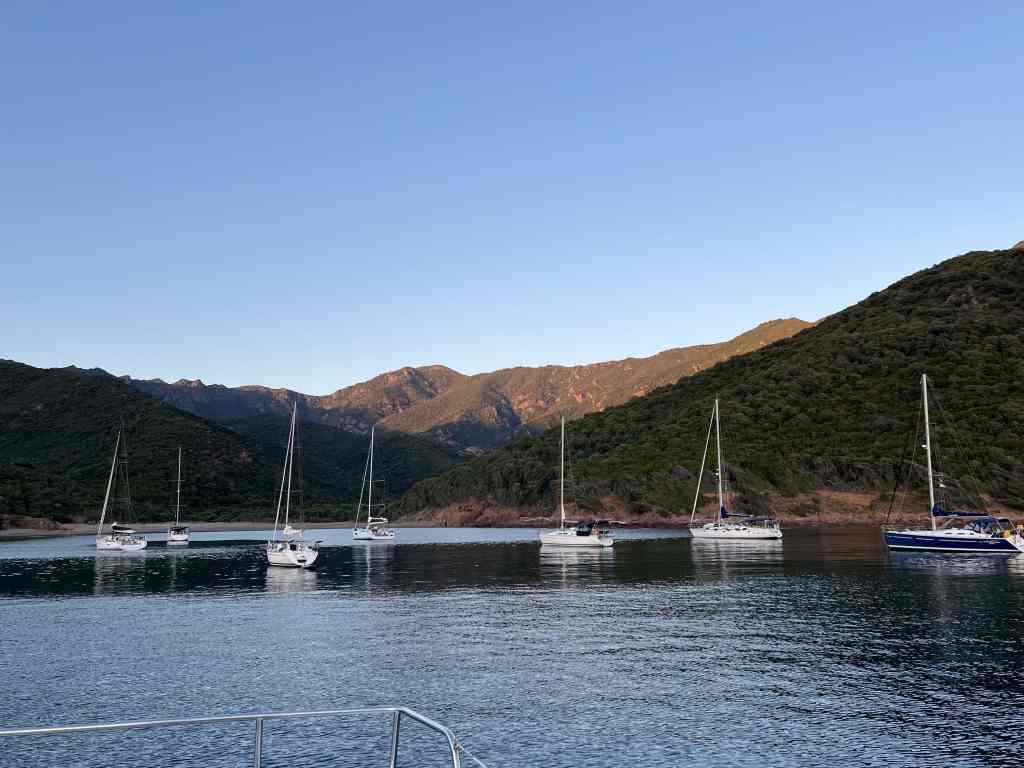
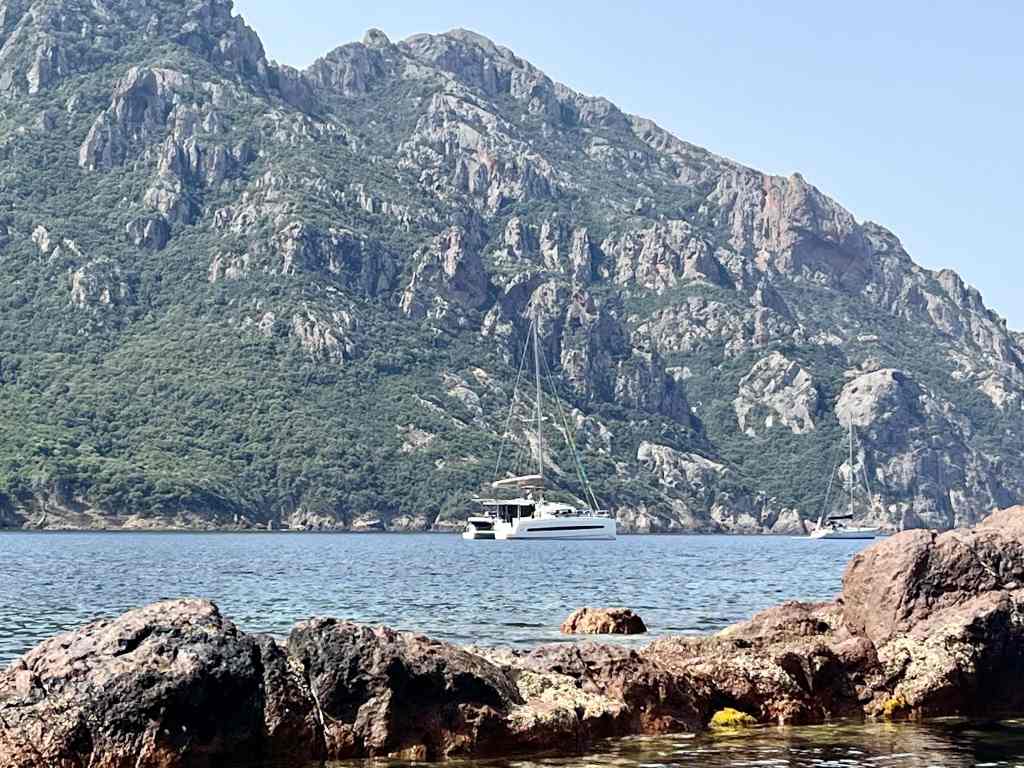
In the morning, we left with a completely overcast sky and a decent wind forecast. However, the day went like this:
- We got the main and jib sails up.
- Unexpectedly, we had strong wind gusts.
- We pulled in the jib.
- Then we could turn into the wind and reef the main sail to handle the strong gusts.
- Then the jib went back out.
- All of a sudden, our furled screecher sail came loose at the top and was flapping uncontrollably.
- The jib came back in.
- We turned once again into the wind to take the pressure off the flapping sail.
- We dropped its halyard line in order to take the screecher down completely. It was a tense moment as I envisioned Conor getting knocked overboard trying to wrestle the sail off or the sail was going to get shredded by the mast.
- Thankfully neither occurred.
- Once the screecher was all tied up on the foredeck, the jib went back out yet again.
- Then, of course, the wind died altogether.
- Jib went back in.
- Then it started to lightly rain.
- The sprinkling of rain still brought a ton of sand, and Sabática was once again red. (Thank you, Sirocco!)
All of this activity, mind you, occurred within our first hour, and Conor was definitely getting a sweaty workout with all the jumping around.
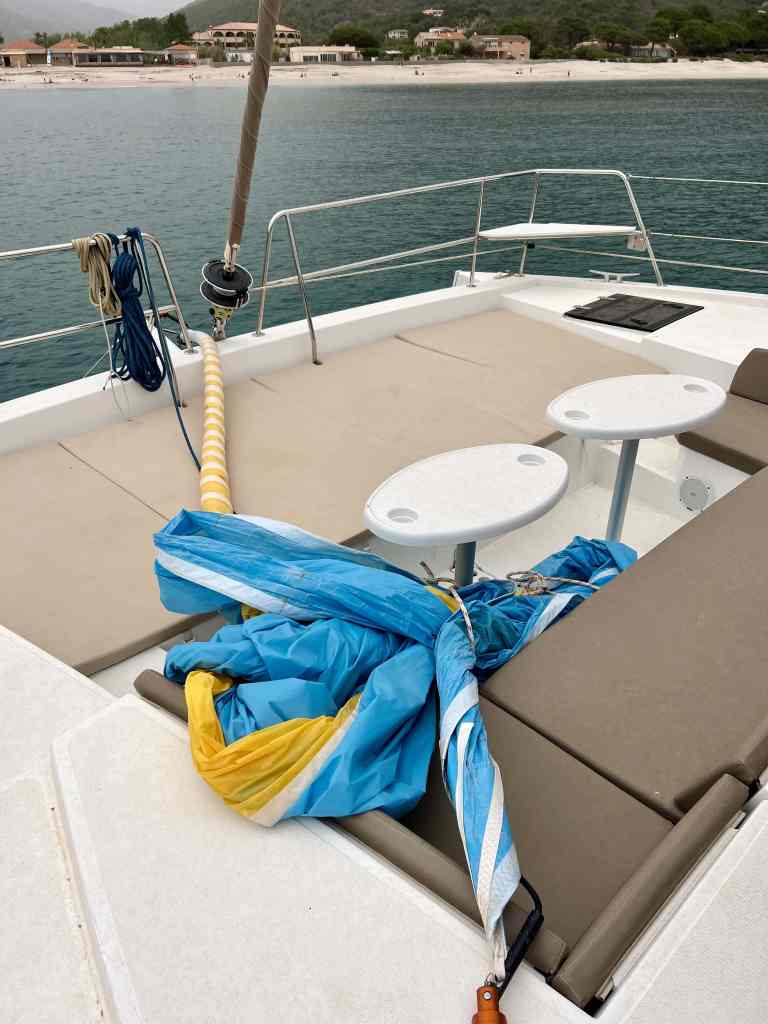
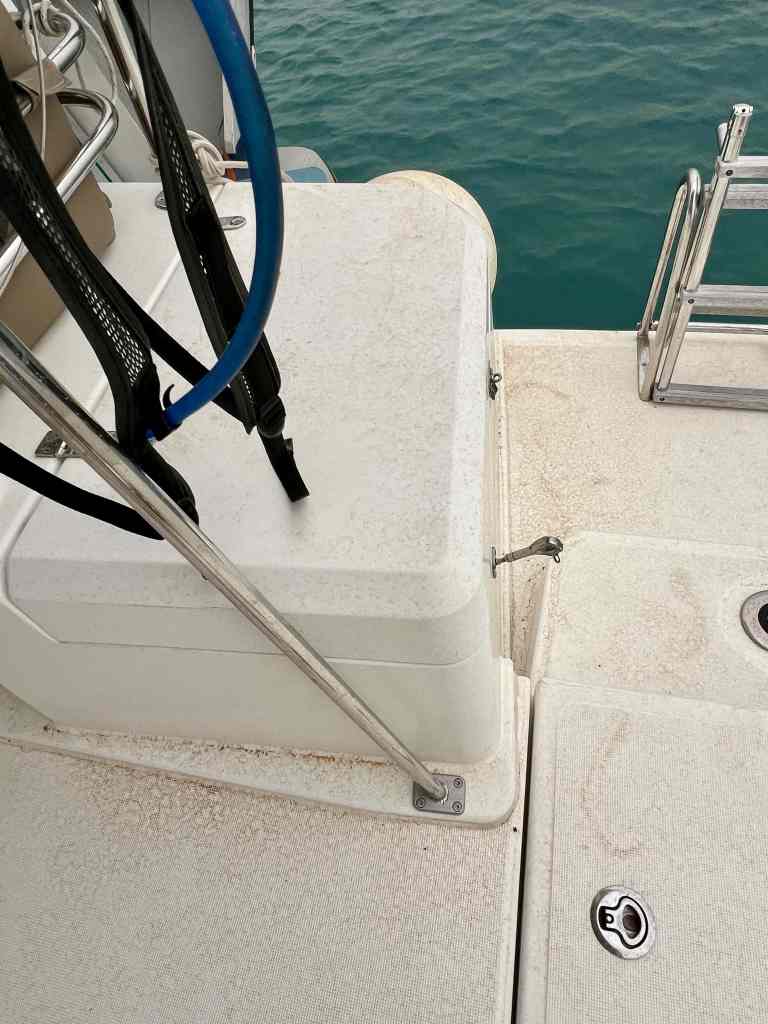
We made it to our next anchorage and were thankful as always for Gertie, our incredibly trusty anchor. We awoke in the middle of the night to big swell banging into the boat. Conor got up to see wild lightening in the sky. Throughout the night, we did a full 360 spin around Gertie but held just fine in gusts up to 40 knots. More rain. More sand. Was any of this forecasted? Nope.
We left early enough the next morning under a thick brown-gray sky, again ominously full of sand.
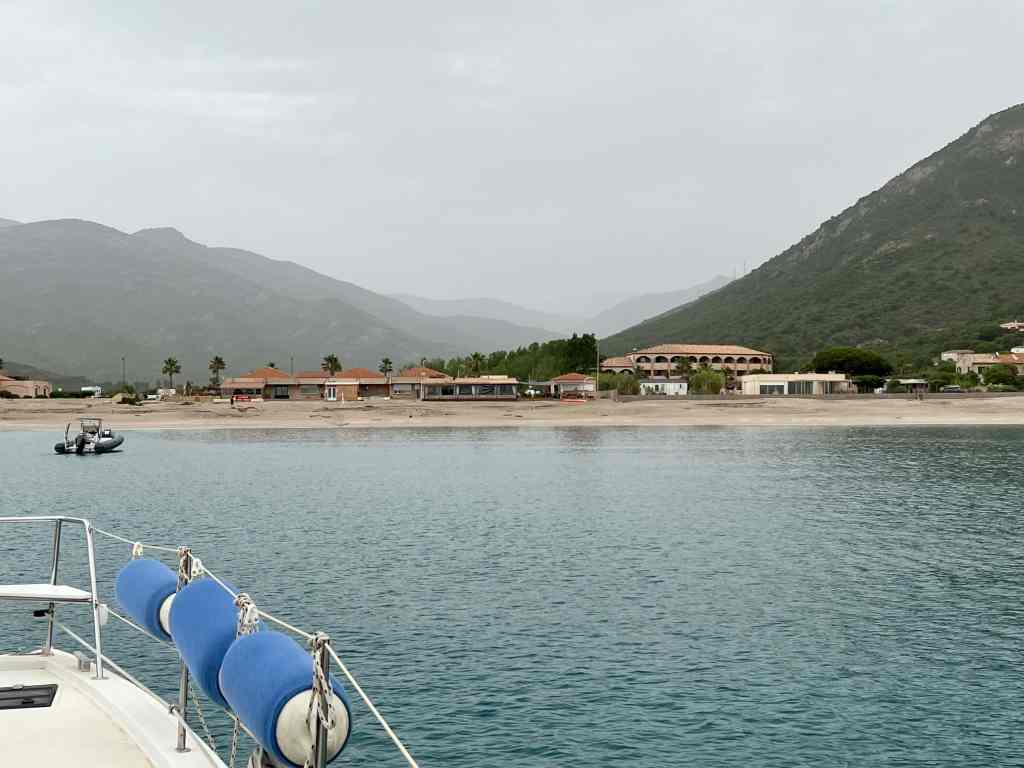
During departure, we were met with squalls of at least 33 knots. The swell was large and the time between waves was short, so this made for a rodeo bull riding day. The wind turned hot then it was completely squirrely, shifting from every direction. The humidity was such that it was nearly impossible to dry one’s hands or feet. To add to the fun, military planes kept coming out of nowhere scaring the heck out of us with their instant deafening noise. You’d have thought they were just one foot overhead. I did a bit of research and determined they were likely L-39 fighter jets. Amazingly, they are an adventure tourist attraction in Corsica!
With everything combined, all there was to do was to stay calm. I’d take some deep breaths, do some daily puzzles on my phone, listen to some really mellow music (hello James Taylor and John Denver!), and just focus on getting a great ab workout from the swell. As Skipper, Conor is great at remaining quiet and calm, and I thank him for that! ❤️
So while Corsica is fabulous, if you plan to sail around her (especially on the west coast), you need to know what you’re doing. Conor maintained a healthy dose of paranoia the whole time with the wind so unpredictable. It’s completely worth it, though, you just need to have plenty of time and patience. Also, bring fly swatters. Did I mention the flies? We were inundated at some of the anchorages, and we think groups of them hitchhiked with us for awhile. Otherwise, we highly recommend a visit to Corsica! Next stop… Bonifacio!

 Sailing Sabática
Quite an eventful few days, but all under control. Gotta love those Med winds.
LikeLiked by 1 person
Holy cow Lisa! That was an adventure!
Roxie
LikeLiked by 1 person