
We continue to enjoy the southern Dalmatia region of Croatia.
Fun Fact: Did you know that the Dalmatian dog breed was named after this region, supposedly its first home?
Fun Fact #2: This region became famous more recently because much of the popular TV show “Game of Thrones” was shot here in places like Split.
Milna
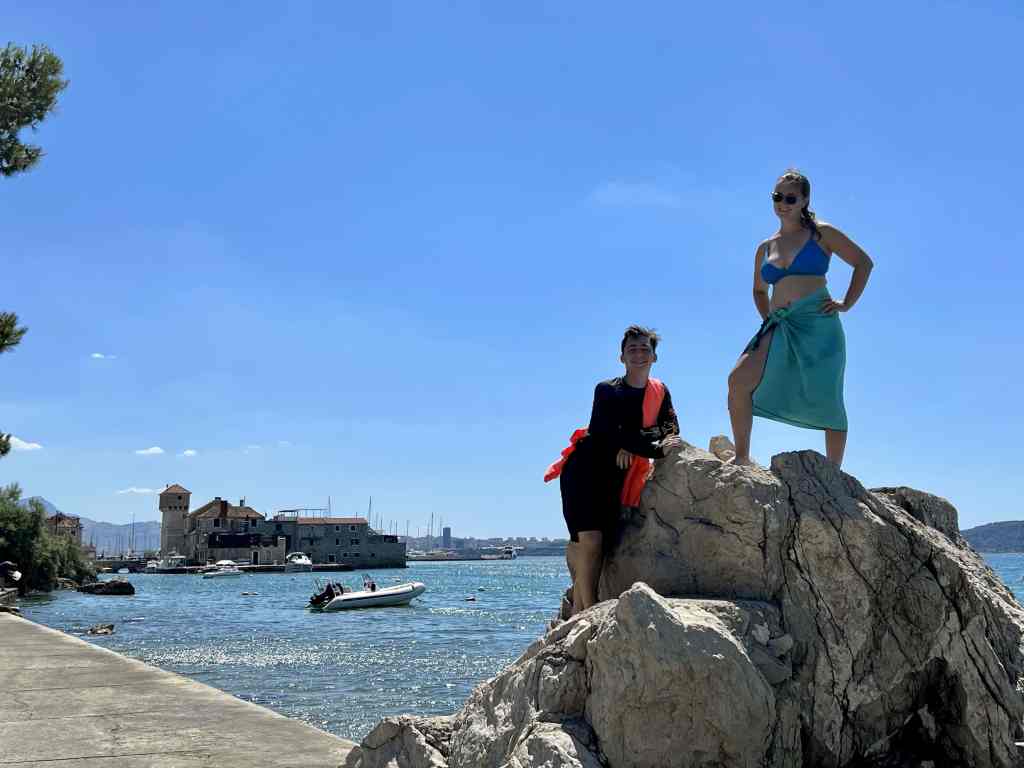
After our surprise storm experience, we headed to the town of Milna on the island of Brač. We spent a couple of days just chilling out. We were at a nice little marina (Marina Vlaska), which while a bit choppy, was a really nice spot. The beach was maybe a 2 minute walk away and was likely one of my favorite “beach” areas. It was right near a small “resort” and the shoreline was really nicely done with beautiful stonework. We were then about a 15 minute easy walk into the town.
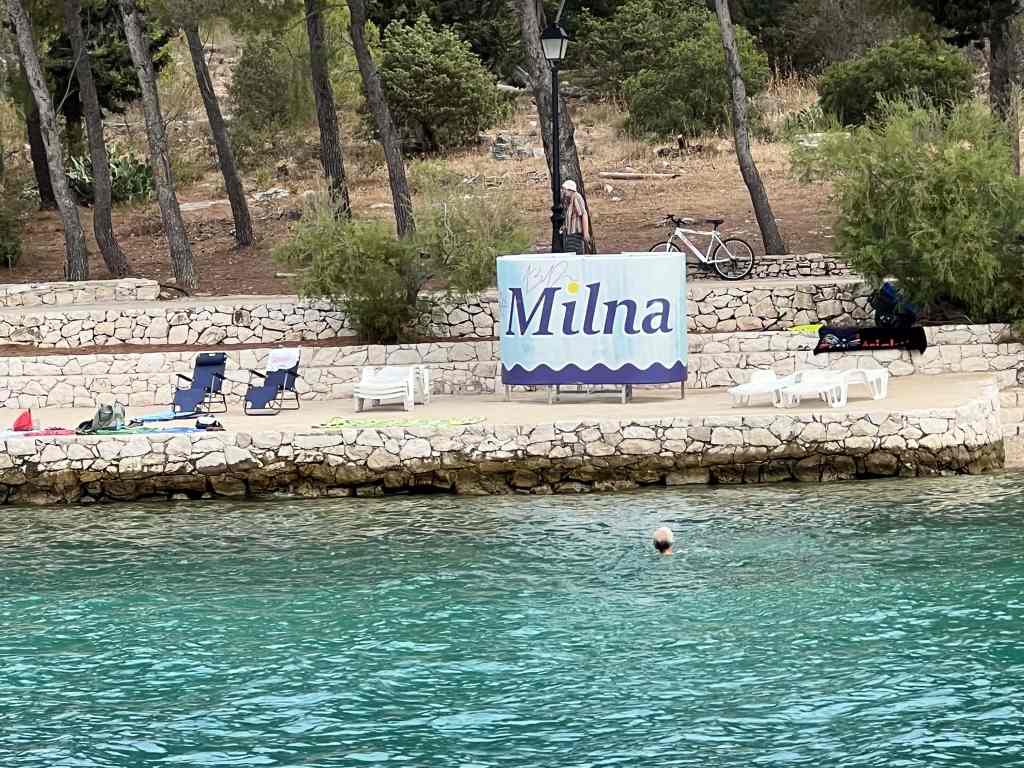
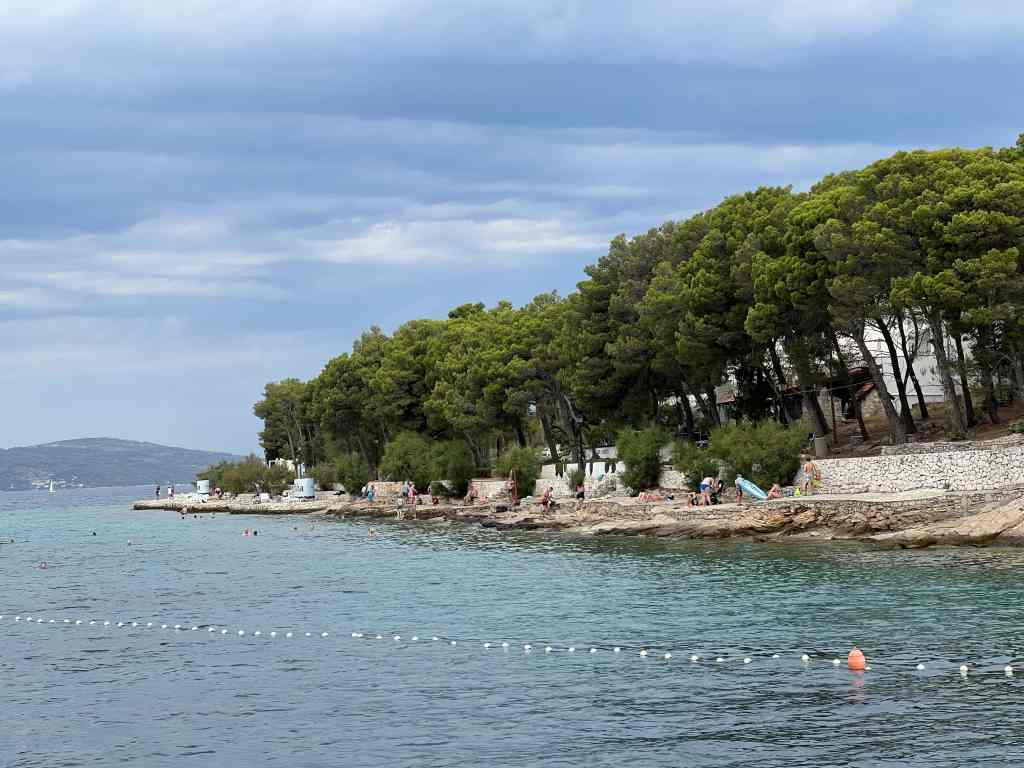
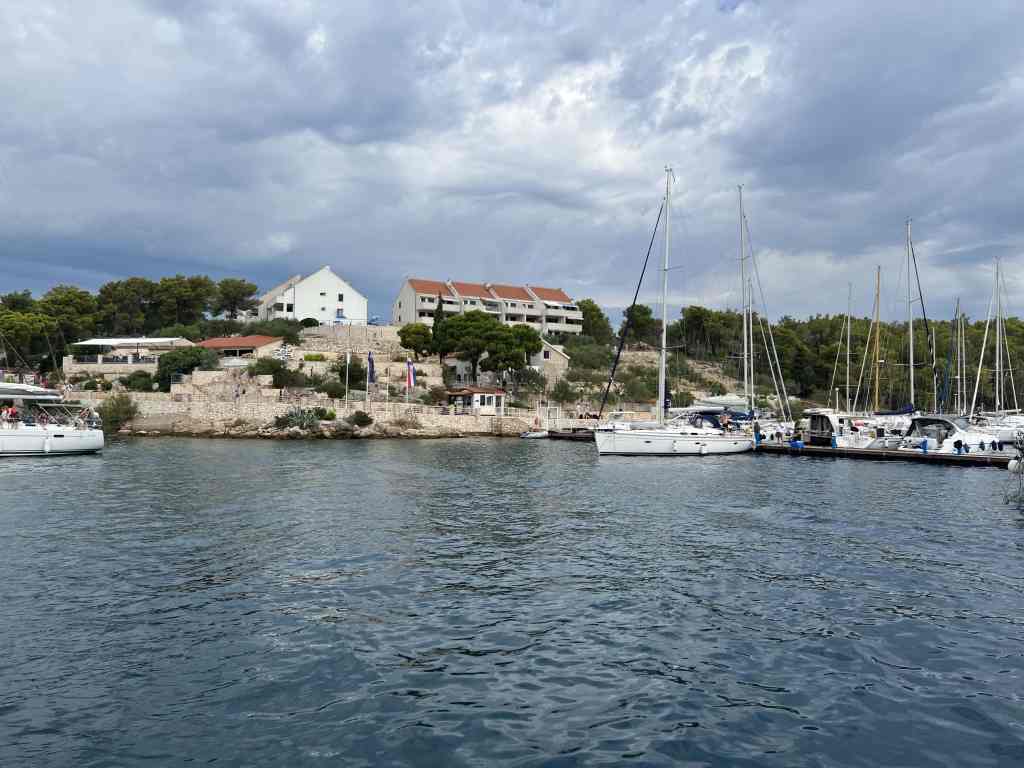
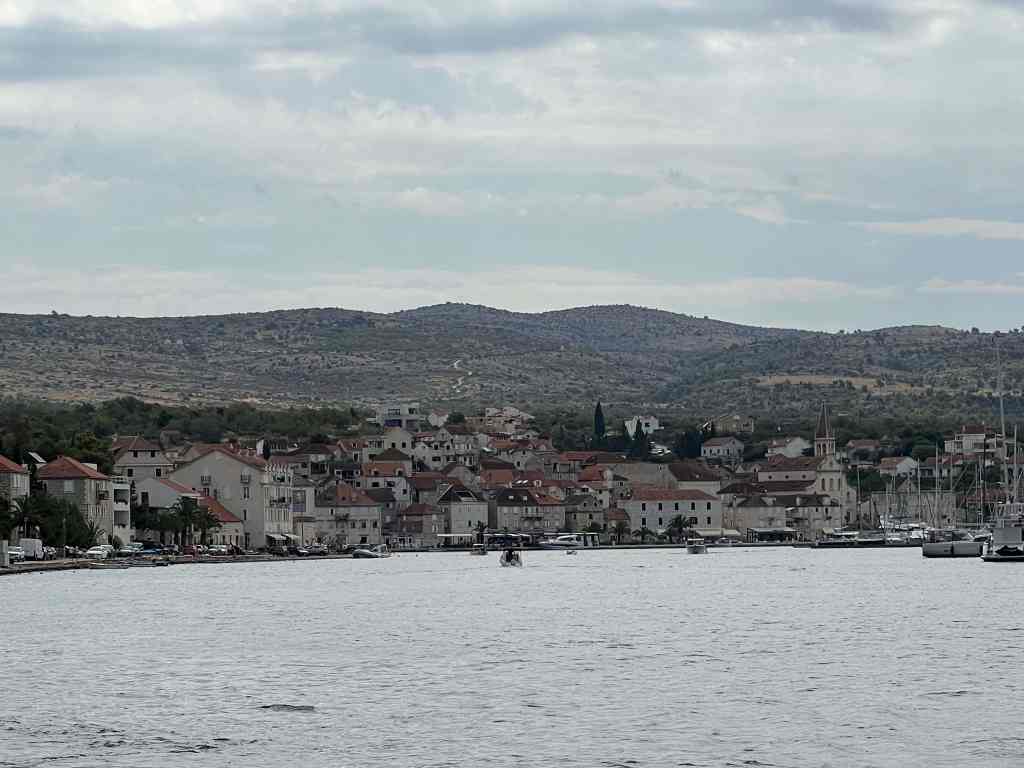
Our only mishap here was upon arrival. As we were docking and the marina staffer was passing over a slime line, it ended up getting caught in our prop. We figured this out as the boat hook I was using to catch it completely buckled. Conor dove in to check it out. The marina would not let him fix it as they wanted to ensure their line was saved. We had to call a diver. Well, they called the diver, we just had to pay for it. Apparently, this happens frequently enough at this marina for some reason. The staffer said, “Shit happens. What can you do?!” Ultimately, Conor felt this was a bit of a side hustle for them as he saw another boat the very next day having to do the same thing! We would still come back, though.

Kaštela
It was Saturday morning and we were finally on our final leg to reach our kids! We had an easy two hour trek from Milna to the mainland, and we were hoping to raise the sails. However, we were headed straight for a storm so decided to keep it easy. We took a bet on whether the storm would pass through before we reached it or not. I owed Conor a beer, but I was totally ok with that! There’s something a bit unnerving about heading straight into a storm you can see.
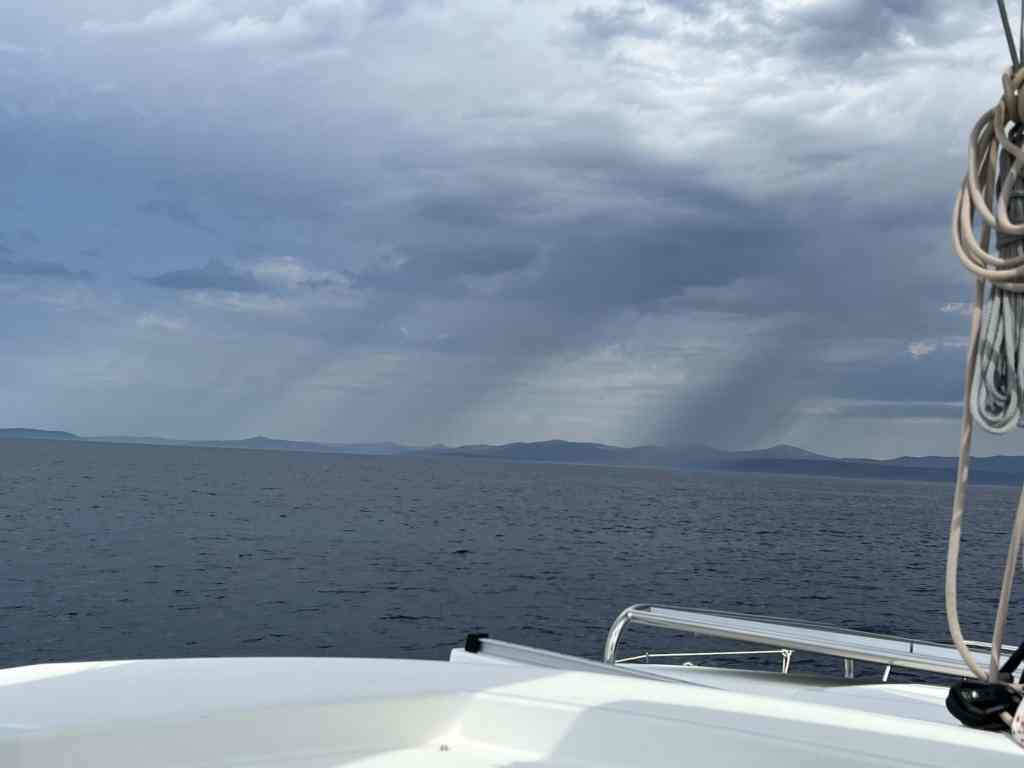
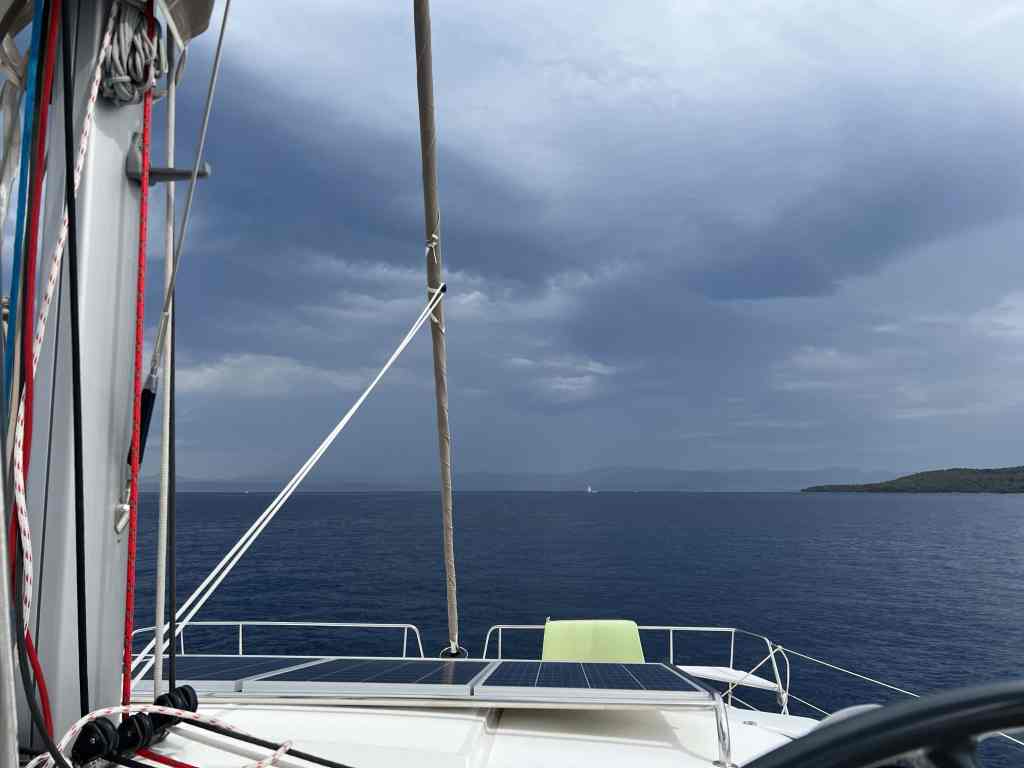
We arrived into Marina Kaštela and it was huge and full of mayhem. It was Saturday around 12:30pm and it was charter boat mecca. All the charter boats in the area were flipping – cleaning up and collecting new passengers for the week. We had yet to see anything like this. We had to get here, though, in time to meet our kids. Laura arrived from Switzerland around 1pm, and Rory arrived from NYC via Munich around 5pm. Fabulous we all made it to the same place with uneventful travel! The marina staffer also made my day as we were docking – I had asked him a question and he said “Nope, you’re all good. You know what you’re doing.” 🙂
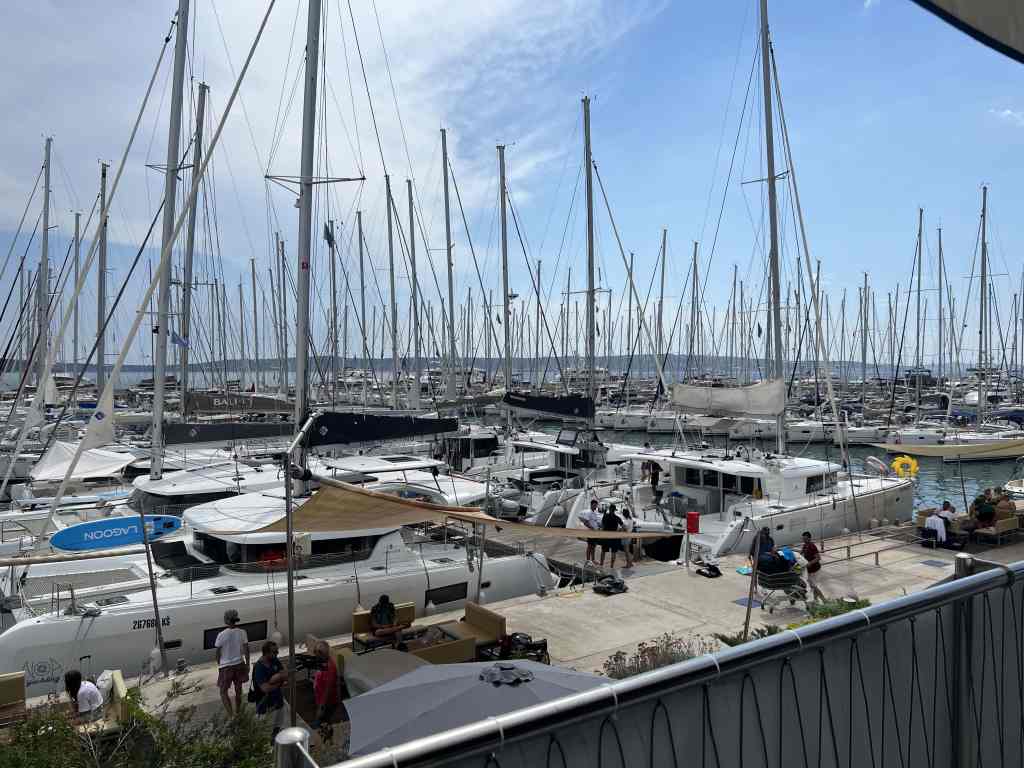

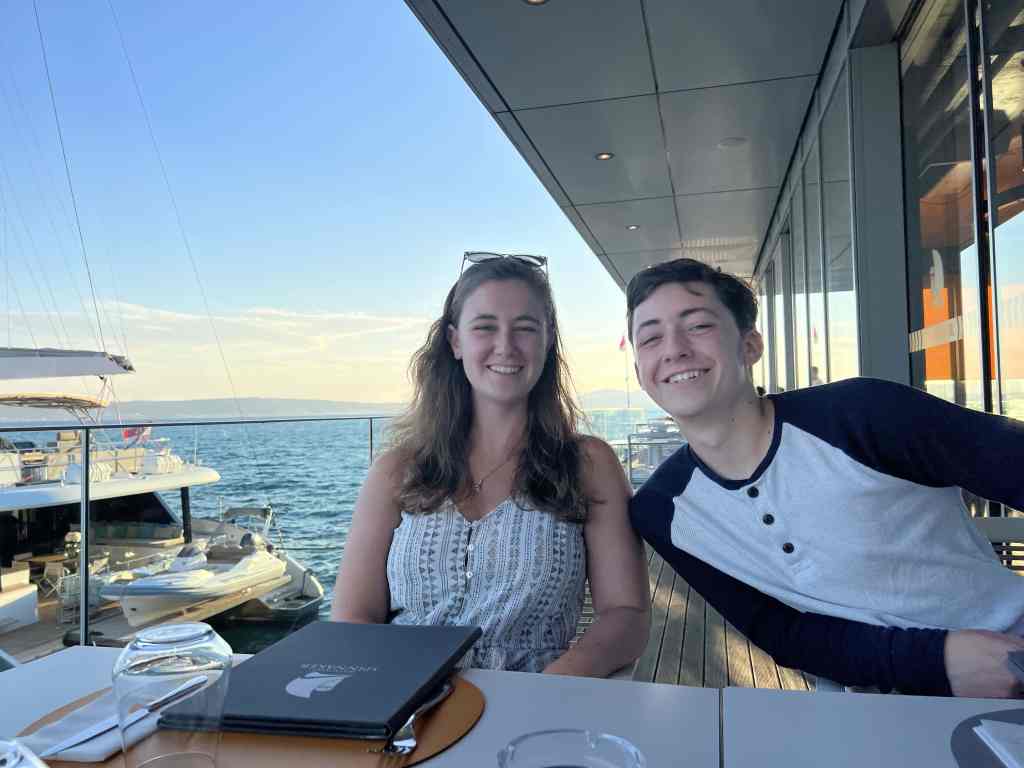
We had an amazing dinner that evening at the Spinnaker Restaurant in the marina and enjoyed a very nice local beach during our stay about a 10 minute walk away. (If you come here, don’t go to the beach closest to the marina. Keep walking through the neighborhood past the castle until you get to a wide concrete promenade. Easy access and not crowded!)

The town of Kaštela sits in between the towns of Split and Trogir. It developed from 7 castles and their settlements that began here. Our castle in Kaštel Gomilica was built in the 16th century by the Benedictine nuns from Split. It was wild to walk through it and see how people today still have their apartments surrounding it.


Split
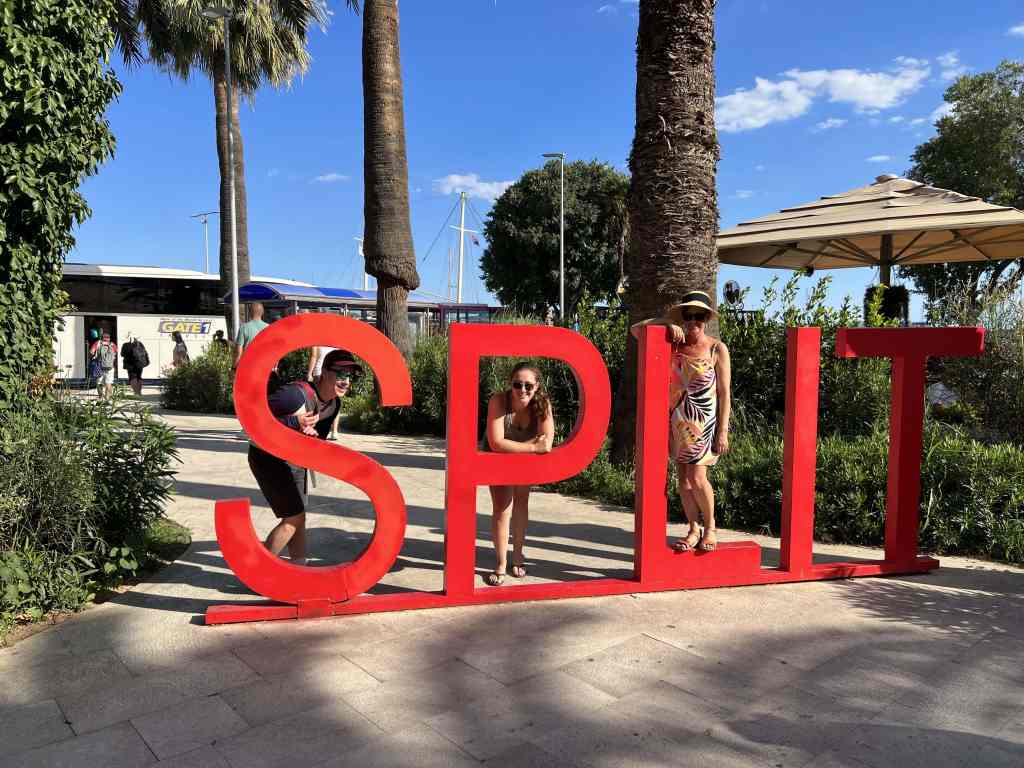
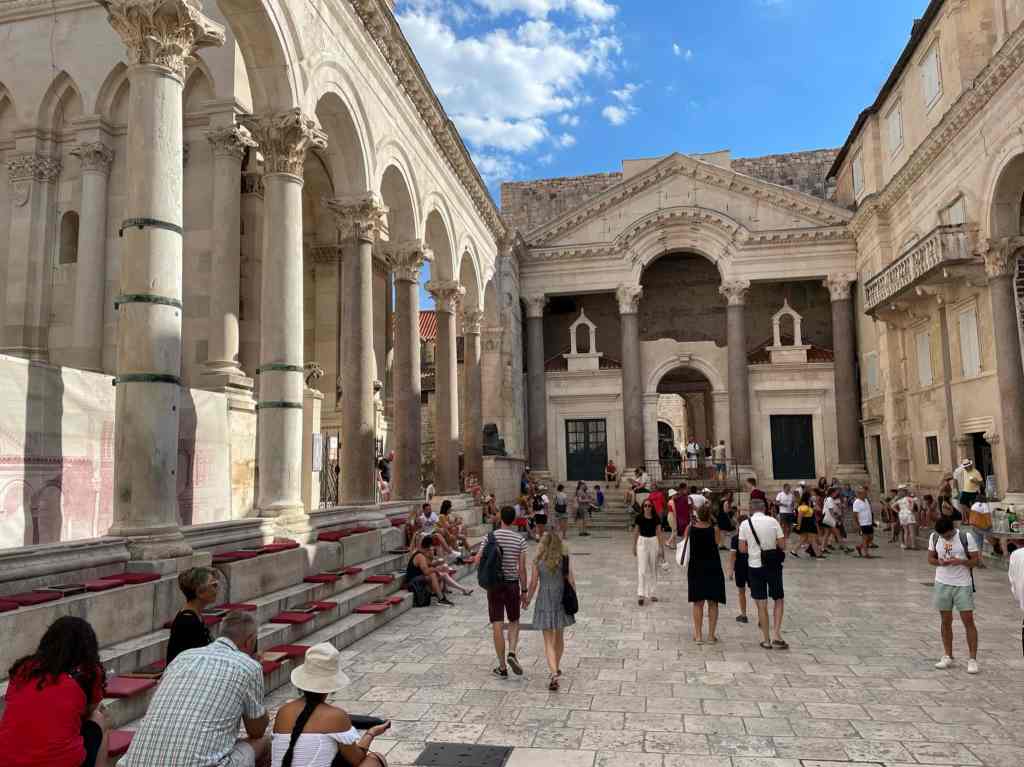
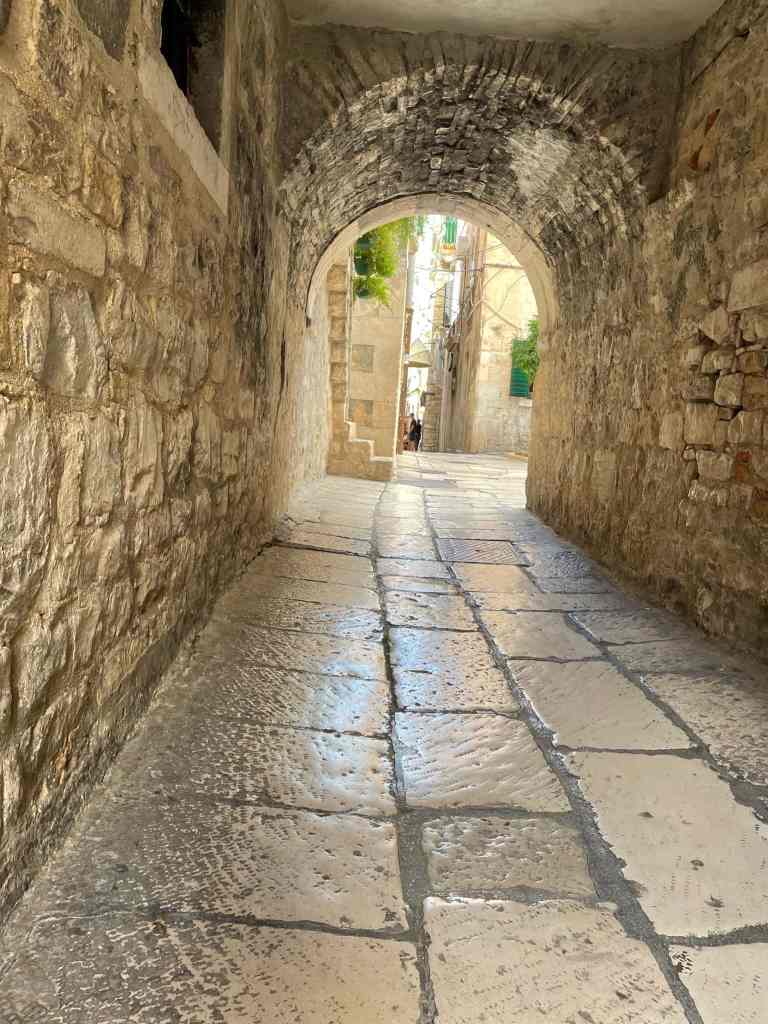
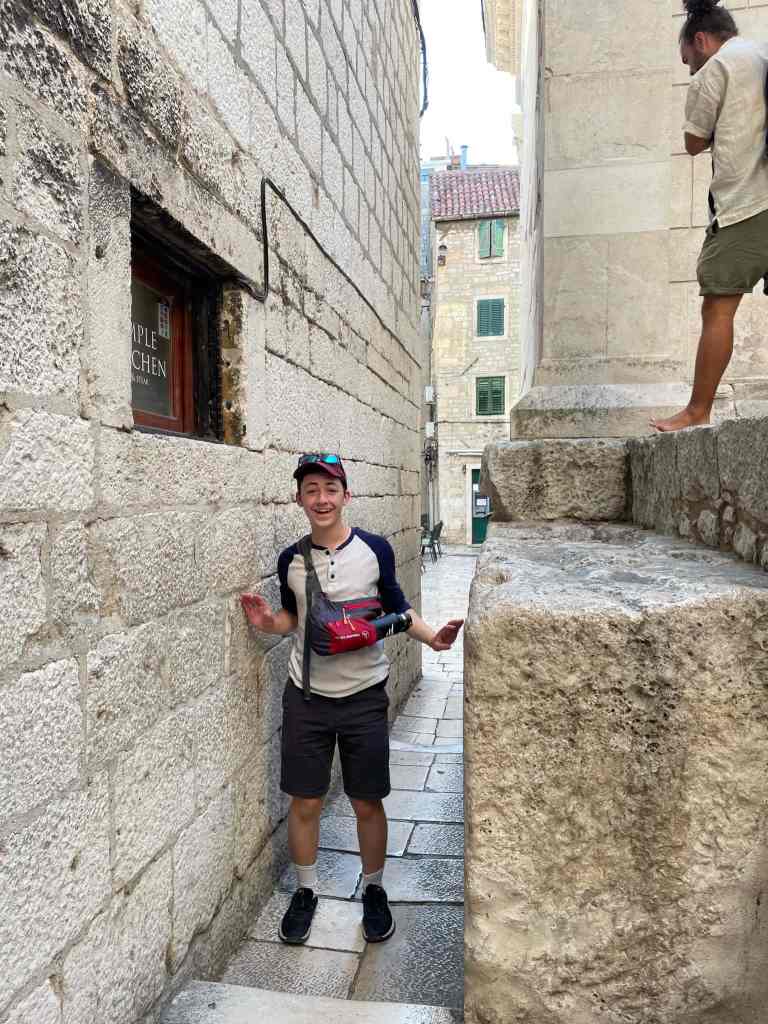
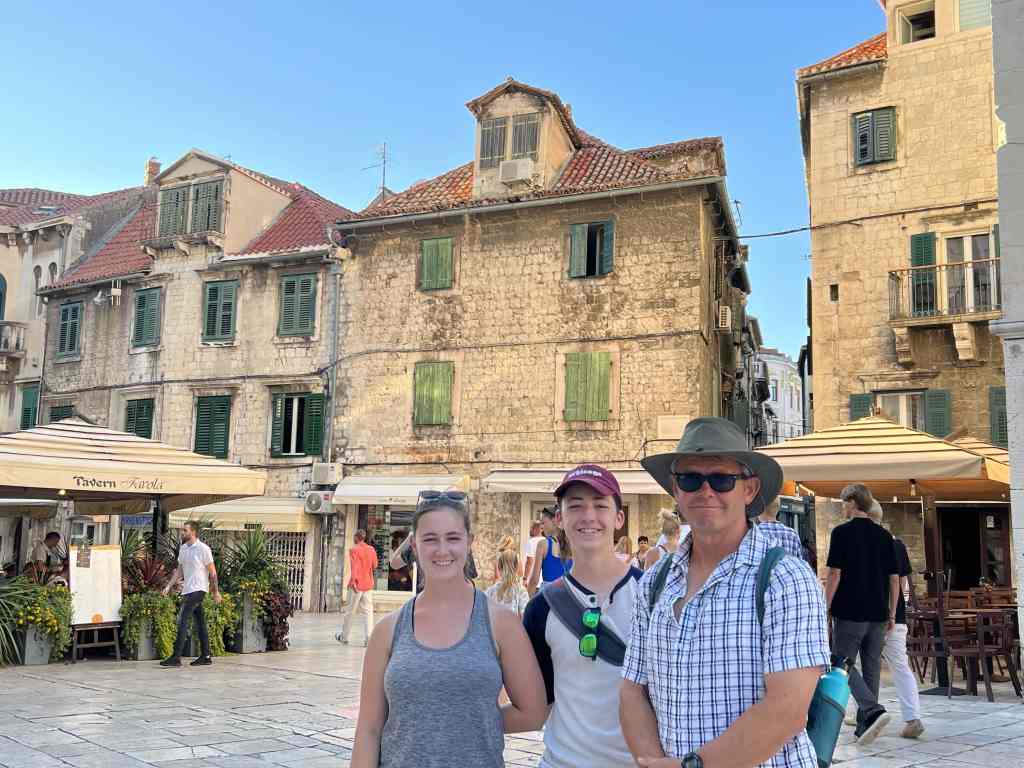
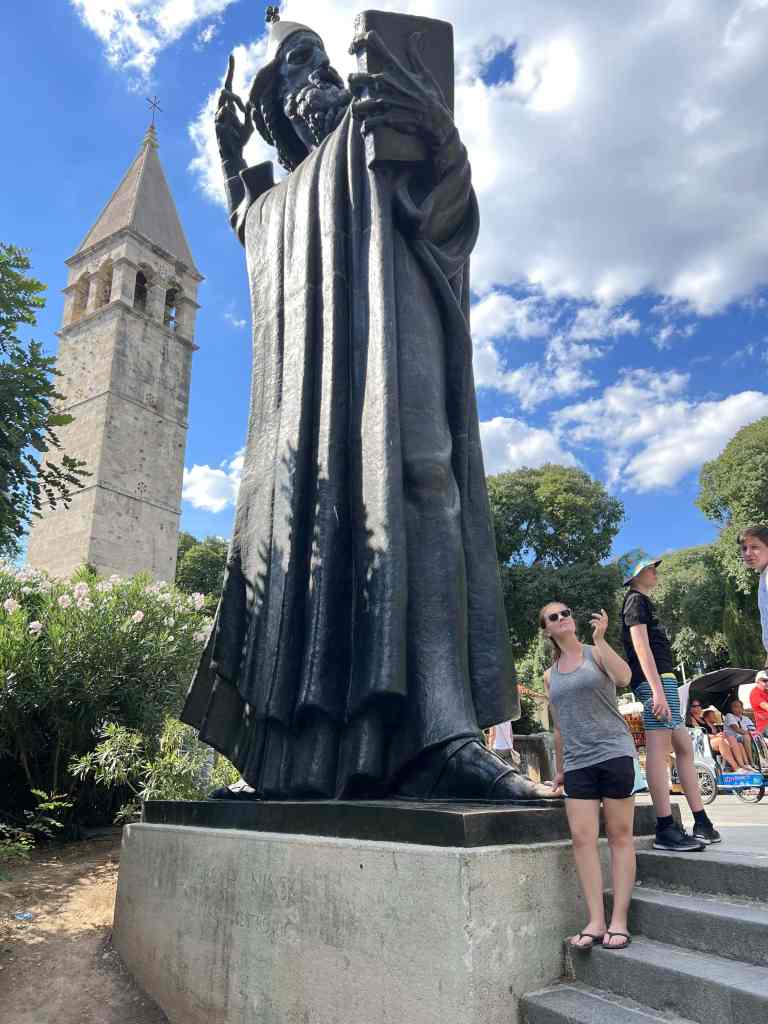
The largest and most well-known city of this area, Split, is definitely worth a visit. We spent an afternoon meandering near and around the Old Town allowing for some jet lagged napping in a nice park near one of the Old Town entrances. We then had a fabulous walking tour with a great guide from GuruWalk, Gabriela. (We highly recommend doing free walking tours in any city and we have had really good experiences for years with GuruWalk.)
Gabriela, who happened to be a high school art history teacher, painted a vivid picture of how Split came to be and has survived as a vibrant city to this day. First of all, the name of the city is derived from the Greek word for a yellow flower that grows in the area. That’s called Aspalathos, which over time got shortened to Split. The thing Split is most famous for, though, is the Palace of Diocletian: in 295 AD, the Roman emperor Diocletian had a residence built there for his retirement in 305. He lived there for about seven years before he died. Many people lived within the walls of the palace as well and continue to do so today. Their residency and everyday activity has kept alive the palace area and preserved much of its history. Funnily enough, a lot of this is due to their trash! The original Roman residents used the basements as a landfill, and that trash prevented seawater from entering and the building from collapsing, leaving it as intact as it is now. The palace and surrounding areas became a UNESCO World Heritage site in 1979. As an example of how it has always been a living city, Gabriela pointed out a sculpture of a sphinx. It was brought to the palace from Egypt and is dated to be over 3000 years old. There is nothing surrounding it and you can even sit atop if you like! Split is really a neat town with lots of interesting history.




Trogir
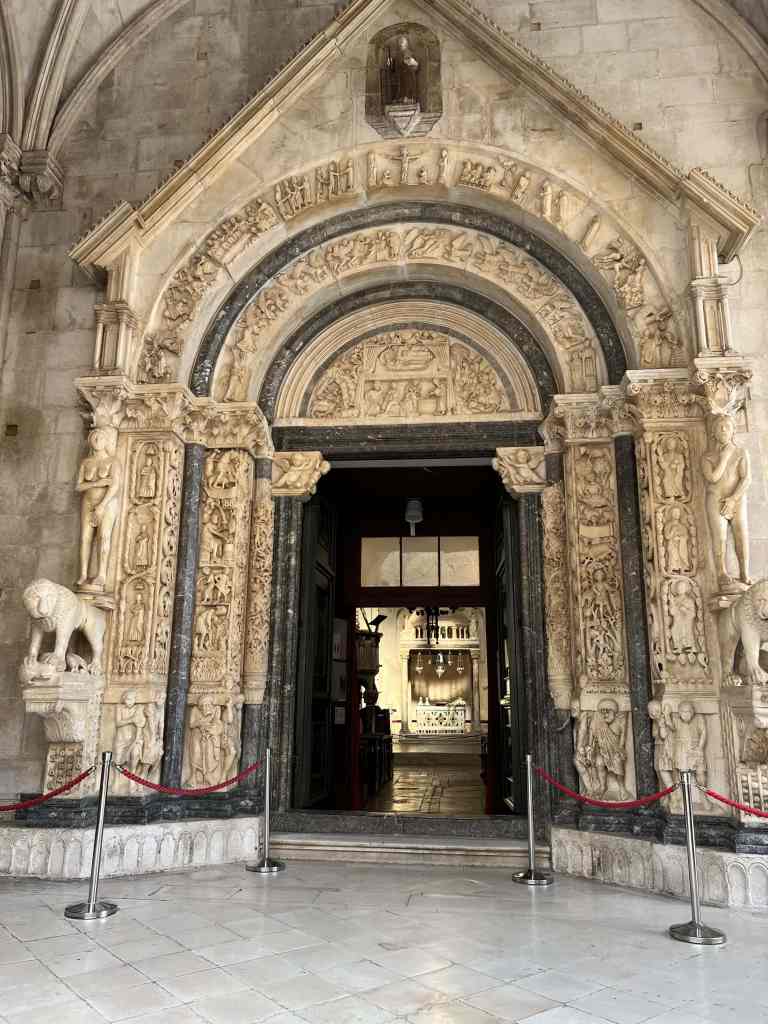
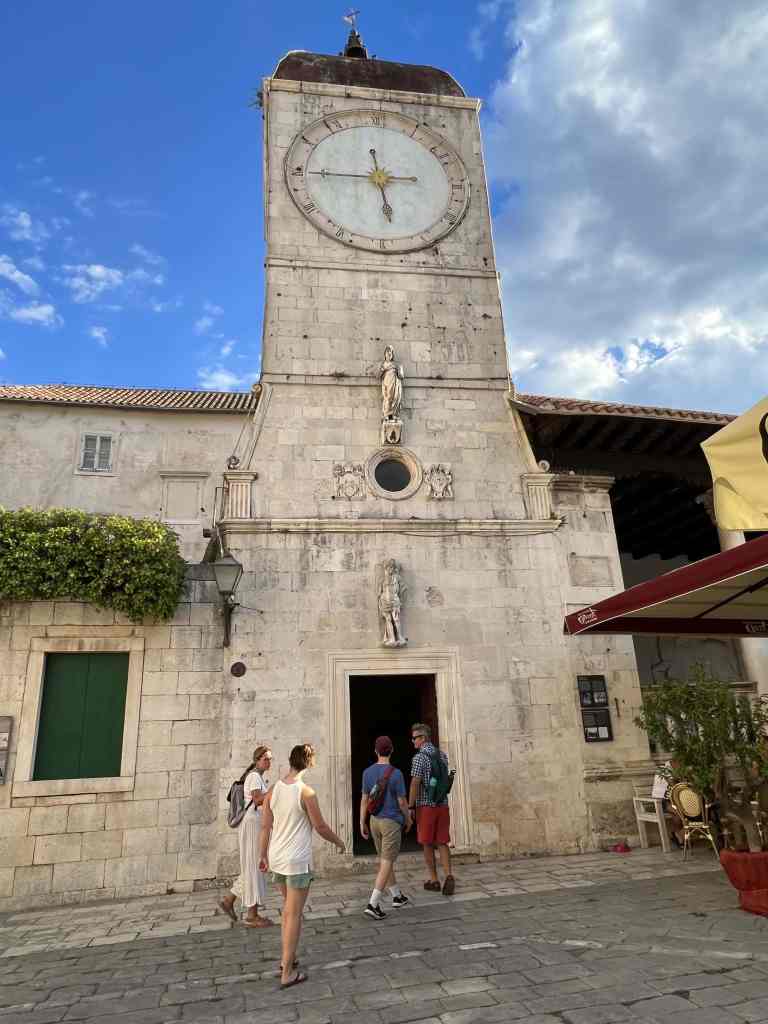
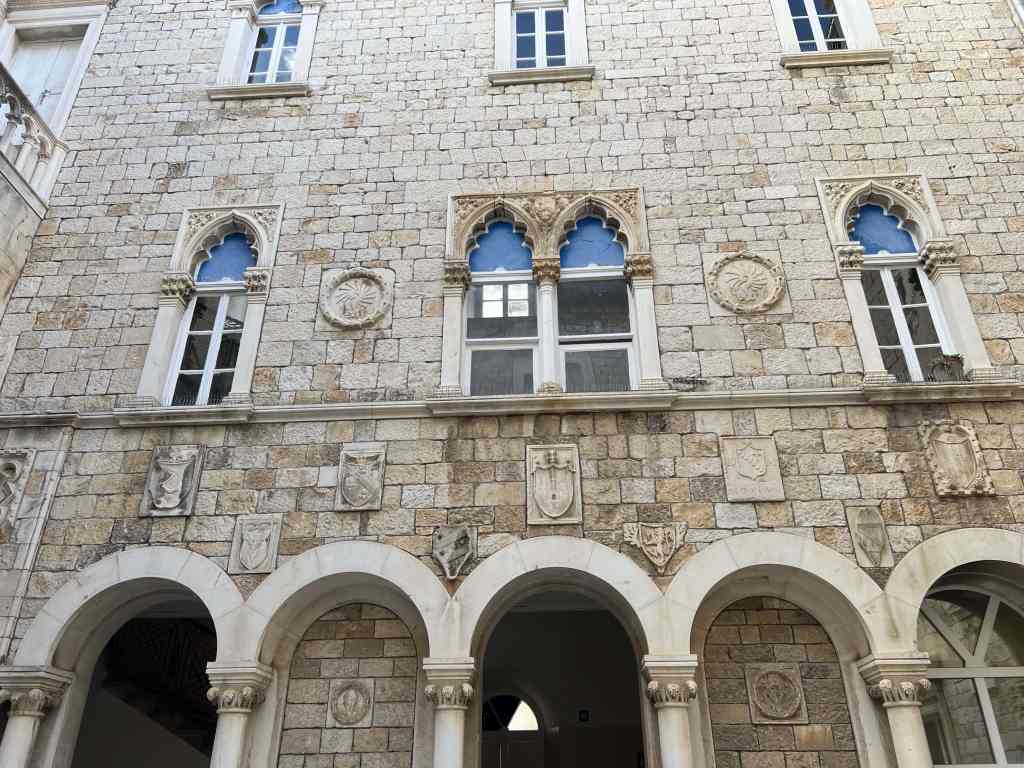
A separate day we headed the other direction and did another GuruWalk tour to learn about Trogir. It’s anther beautiful medieval city with its own Old Town. As with Split, the name comes from an Ancient Greek word, but instead of a flower, Trogir comes from “goat” for all the goats in the area. Our guide, Daniela, was 100% local with her family roots going back for generations. While she could point out lots of interesting places in Trogir’s Old Town, what was most interesting was hearing all of her own perspectives and family stories of Croatia present and past. A few things we learned from her:
- Religion: Roughly 89% of the Croatian population is Roman Catholic. (Croatia as a country has a population of about 4 million people.) Trogir had 15 churches that nobility built in order to still have a pathway to heaven even if they did bad things. Only seven churches still exist today, of which only four are operational. All this in a town of perhaps 13,000 people. She said the churches are mostly empty, though, as so many people, especially the younger generations, have really turned away from the church.
- Sales tax: We finally learned why all vendors are quite preferential to cash payments. All businesses have to pay a 25% sales tax to the government for all sales earned. Crazy! We’re trying to pay more people in cash now.
- Economy: Croatia has become so expensive. Daniela said the average salary worker in the country would earn around 500 Euro per month. Rent could be as high as 400 Euro per month. She said the population of Croatia has shrunk by 10% in the last decade because so many citizens are moving away. 😦
- Serbia: The tensions are real. Her family members fought in the wars of the ‘90s and there has been a long-standing animosity against the Serbs – until one of her sisters fell in love with one. She is now getting married this fall, and the two families had a reconciliation of sorts. Daniela said with this wedding, her family will finally put things to rest, but it is a really big deal.
- Risotto: One of the things we keep seeing on menus around Croatia is black risotto, called so for the cuttlefish it contains and the ink it’s stained with. Daniela said we had to try it before we left, and so Laura bravely ordered it – sure enough, the whole dish was pitch black! And it was pretty good, too.

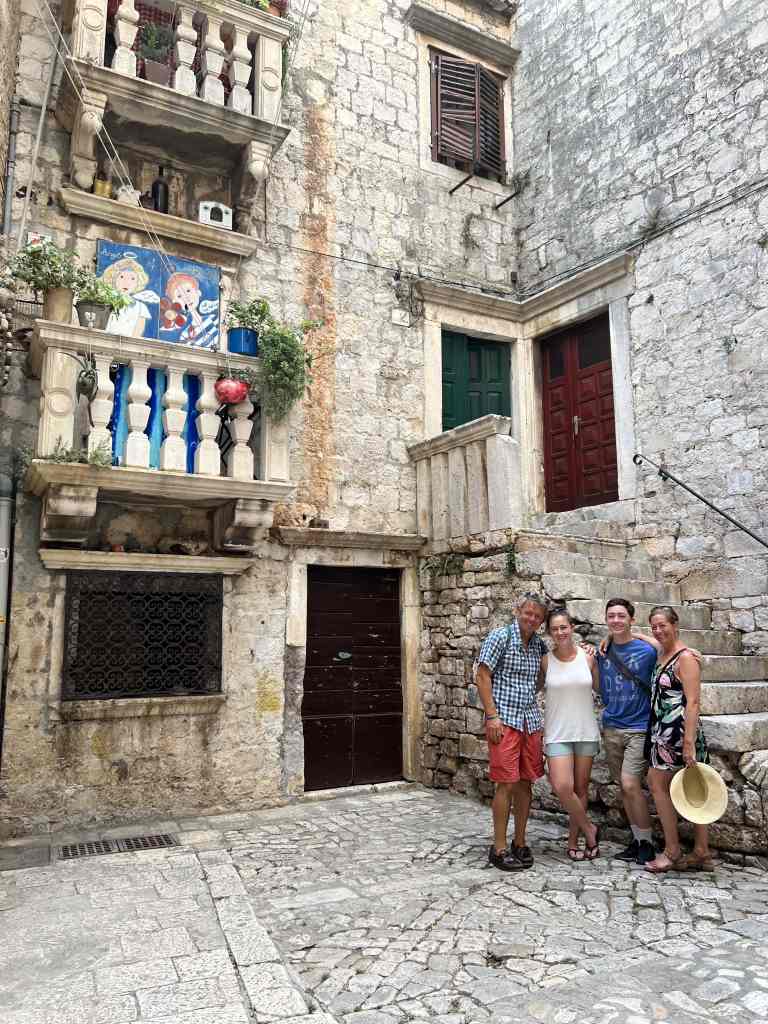



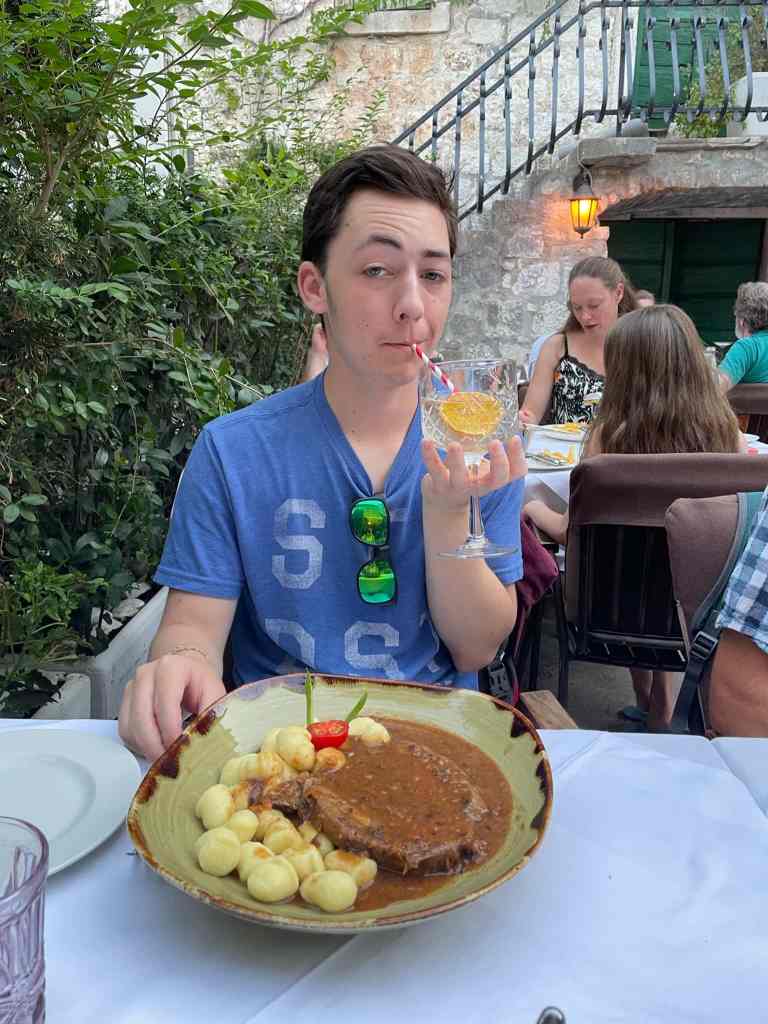
And, the drinking age is 18 😉
Thanks to Rory and Laura for helping to fill in the gaps in my memory! 😉

 Sailing Sabática
LOVE that you are all together!!
LikeLiked by 1 person
Wonderful photos, and detail. Have to come back for Split 🙂
LikeLiked by 1 person
Quite a family outing…
L,
PL
LikeLiked by 1 person
So great to see y’all reunited! I can only imagine. Great history lesson here, too! Have a great time with the kiddos!
LikeLiked by 1 person
Wow it looks absolutely stunning
LikeLiked by 1 person